This chapter of the e-book provides information on economic, social, and ecological sustainability of fisheries in two WARFP countries using Fishery Performance Indicators (FPIs). Under RAFIP, FPIs were used for artisanal fisheries in Guinea Bissau and artisanal and industrial fisheries in Guinea. This work was co-financed with RAFIP and WARFP in Guinea Bissau (WARFP-GB) and in Guinea (WARFP-GN). FPIs were used as a standardized performance metric in WARFP projects in order to understand the investment impacts, as well as for cross-country comparisons across similarly scaled fisheries within the region. A link to a previous application of FPIs at the World Bank is available here. The full reports for the FPI work in Guinea Bissau and Guinea are available here and here, respectively.
Fishery Performance Indicators (FPIs): FPIs are a rapid assessment instrument for measuring wealth generation from fishery resources and were used to provide a quantitative perspective of fisheries performance across the WARFP countries and elsewhere. The FPIs consist of 68 output and 54 input metrics of fishery performance spanning the ‘triple bottom line’ dimensions of ecology, economics, and community in a fishery system. When implementing the FPIs, 121 individual measures are scored from 1 to 5 using bins that are designed to be easy to score across a wide range of fisheries and that are generally chosen to reflect the quintiles of performance on the metric globally. Bins rely on a basic set of data that should be available in all significant fisheries (for example, volumes and prices) and expert assessment of qualitative indicator levels; they require no primary data collection. In addition, each measure is also given a quality score to indicate how confident the scorer is regarding the accuracy of the chosen bin. Additional information on FPIs can be found here. FPIs are a rapid assessment instrument for measuring wealth generation from fishery resources and were used to provide a quantitative perspective of fisheries performance across the WARFP countries and elsewhere. The FPIs consist of 68 output and 54 input metrics of fishery performance spanning the ‘triple bottom line’ dimensions of ecology, economics, and community in a fishery system. When implementing the FPIs, 121 individual measures are scored from 1 to 5 using bins that are designed to be easy to score across a wide range of fisheries and that are generally chosen to reflect the quintiles of performance on the metric globally. Bins rely on a basic set of data that should be available in all significant fisheries (for example, volumes and prices) and expert assessment of qualitative indicator levels; they require no primary data collection. In addition, each measure is also given a quality score to indicate how confident the scorer is regarding the accuracy of the chosen bin. Additional information on FPIs can be found here.
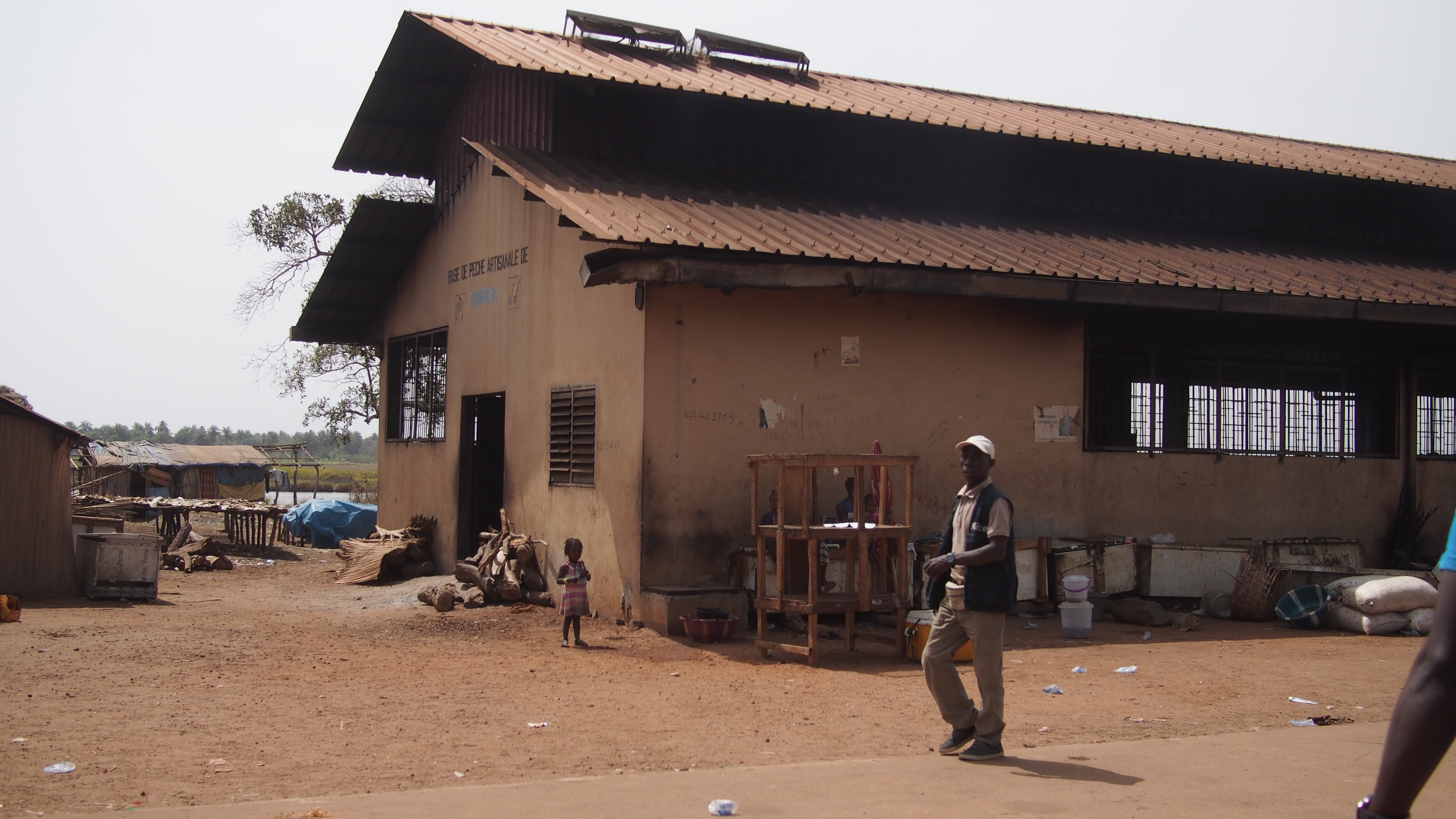
Fishing Villages in Guinea Bissau Where FPIs Were Applied
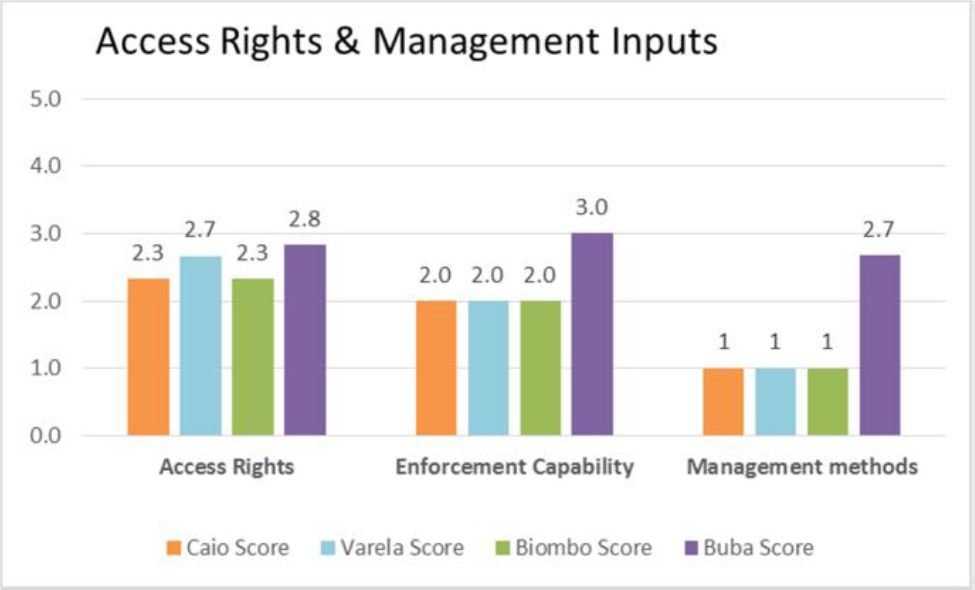
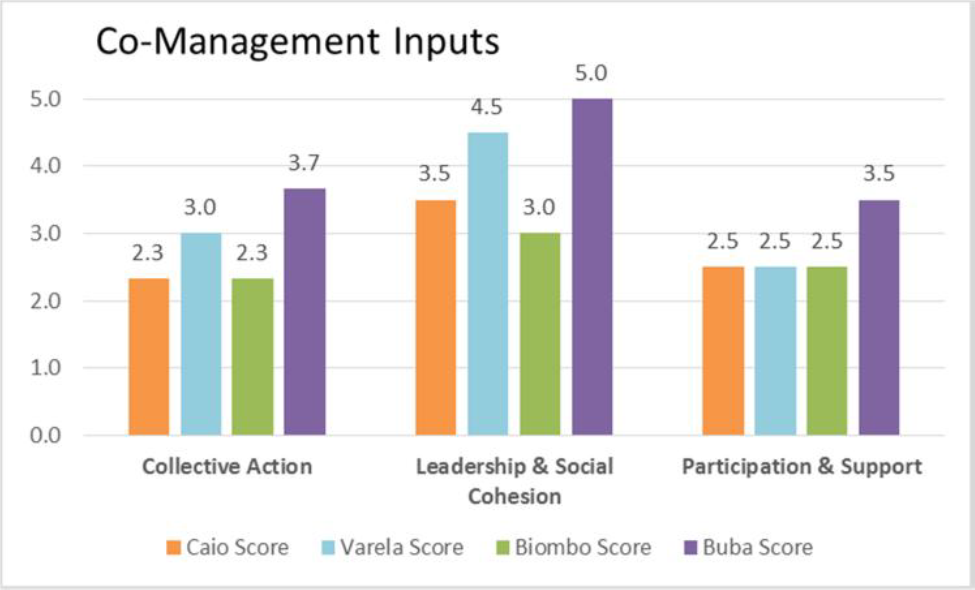
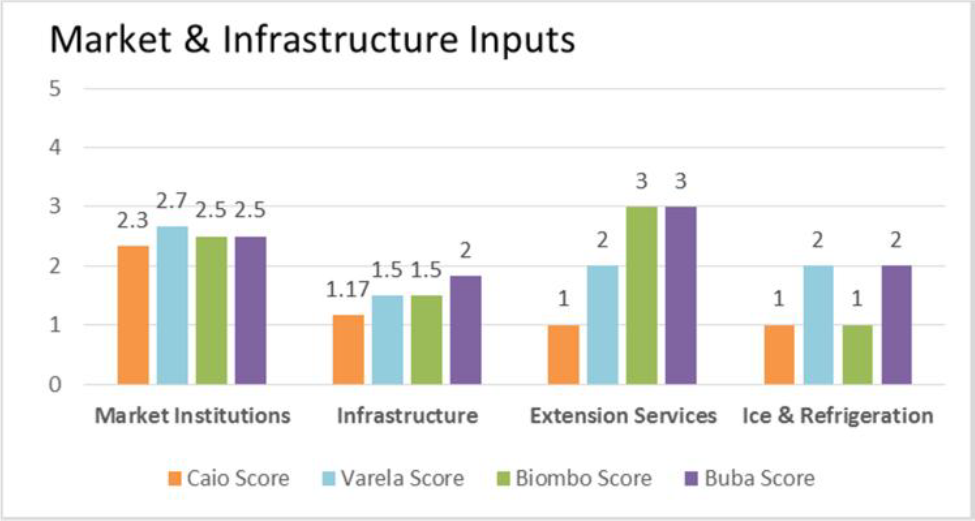
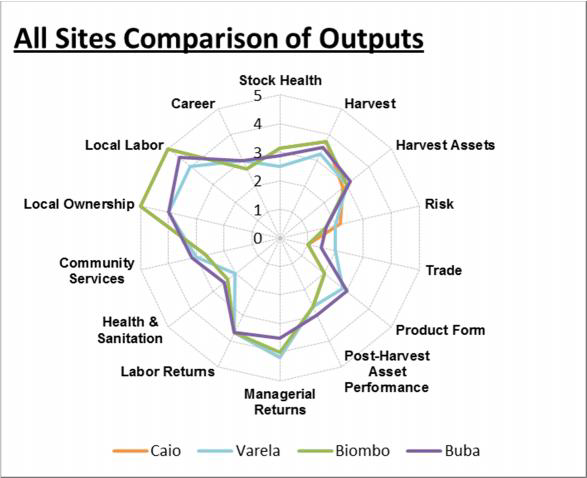
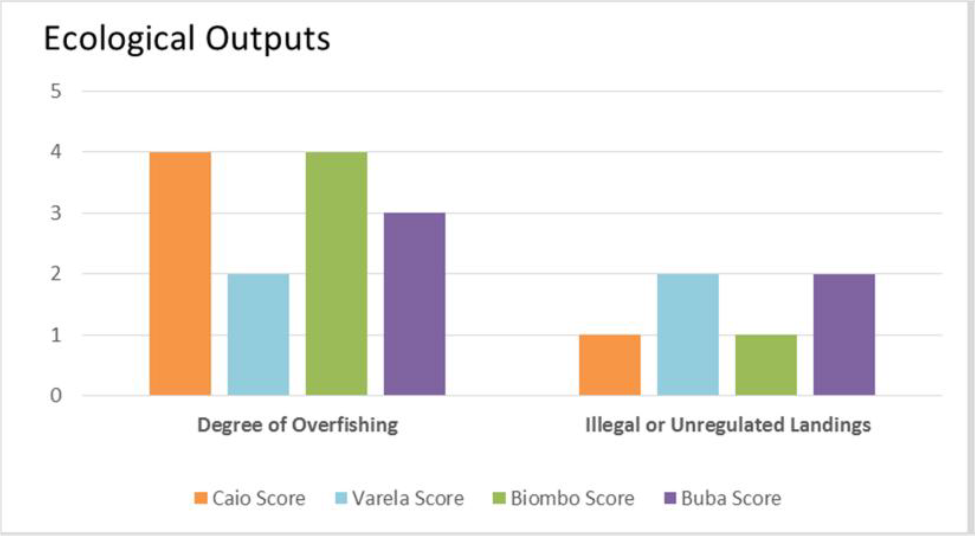
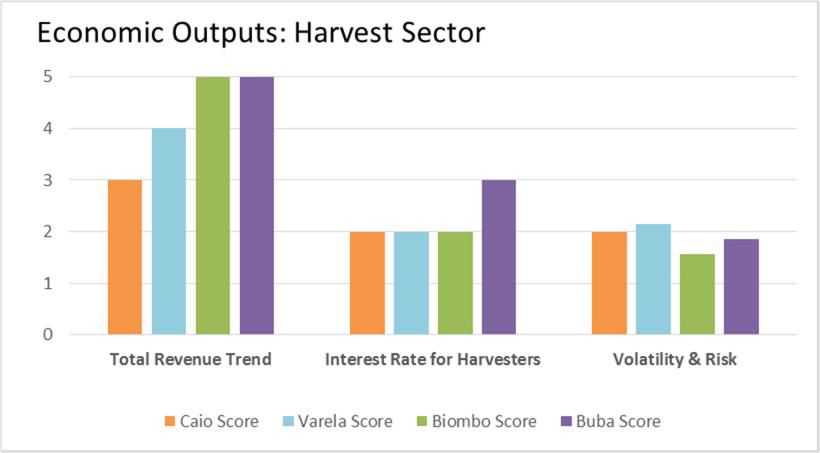
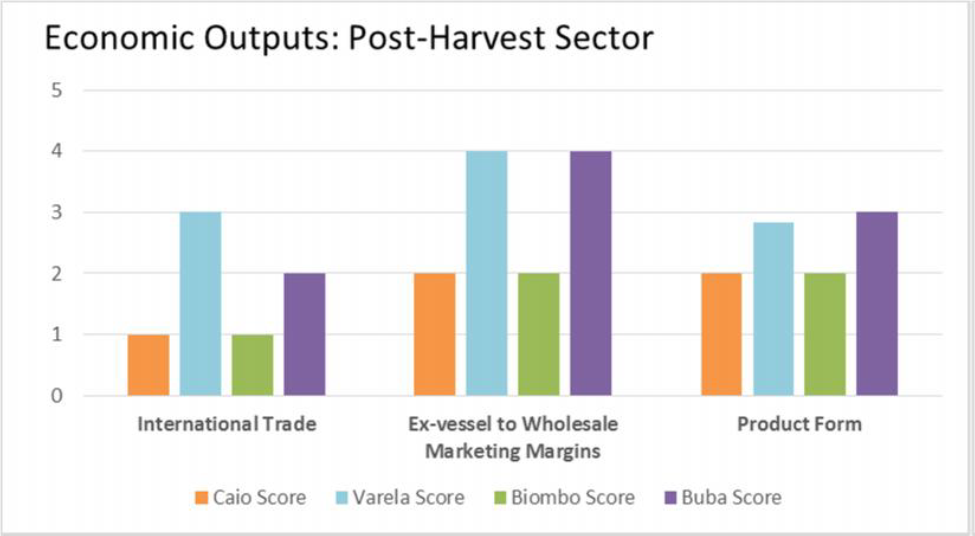
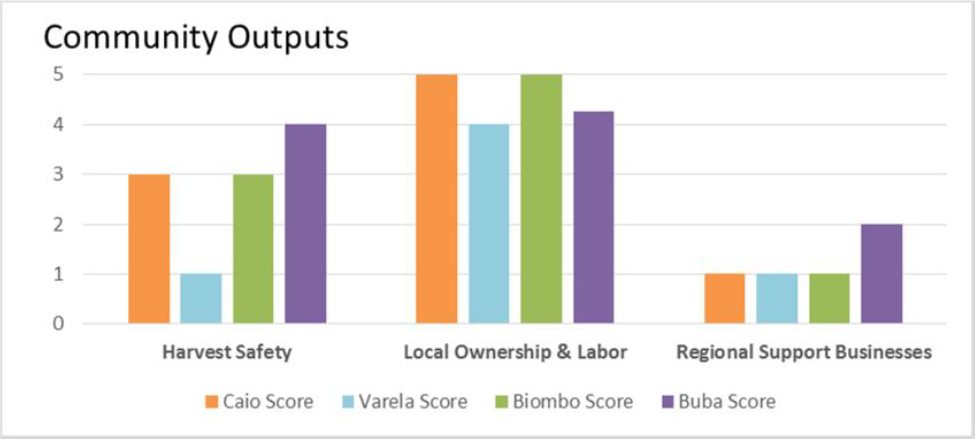
The FPI study in Guinea Bissau explored commonalities and differences between four ports evaluated in 2016 using 2011 data, and then compared the average performance in Guinea Bissau with African fisheries in general, and with the entirety of the FPI database. The sets of FPI scores examined were from mixed-species artisanal fisheries located in four different sites: Caio, Varela, Buba, and Biombo. Caio and Biombo were chosen because they are representative of small and medium-size rural sites, respectively. Varela was selected due to its interesting location on the Senegalese border, and Buba was chosen because it has a long-standing Community Management Association (CMA) and recently implemented spatial management. Figure 3.2 below displays the FPI results for Guinea Bissau.
FPI implementation in Guinea Bissau revealed that key differences in infrastructure, co-management, and surveillance can drive ecological outcomes, and especially can create vast differences in the economic success of the post-harvest segment of the value chain.
Figure 3.2. Guinea Bissau: All sites comparison of inputs


The FPI study in Guinea explored commonalities and differences between the Guinean fisheries evaluated in 2016 and compared the average performance in Guinea with African fisheries in general, and with the entirety of the FPI database.
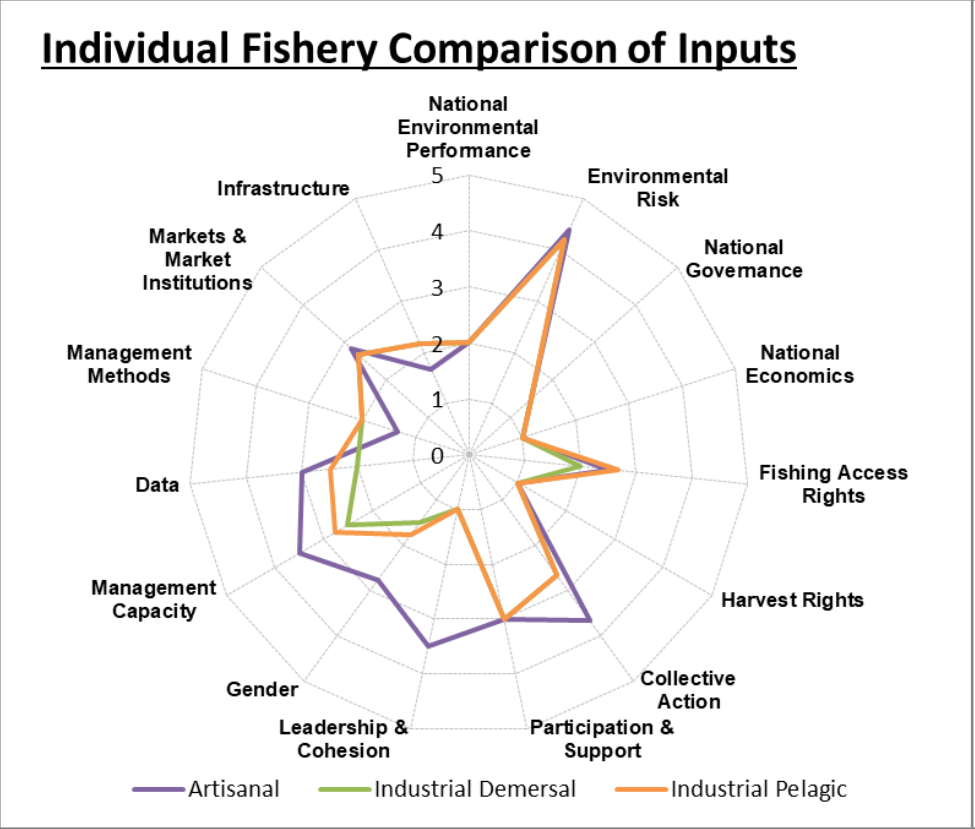
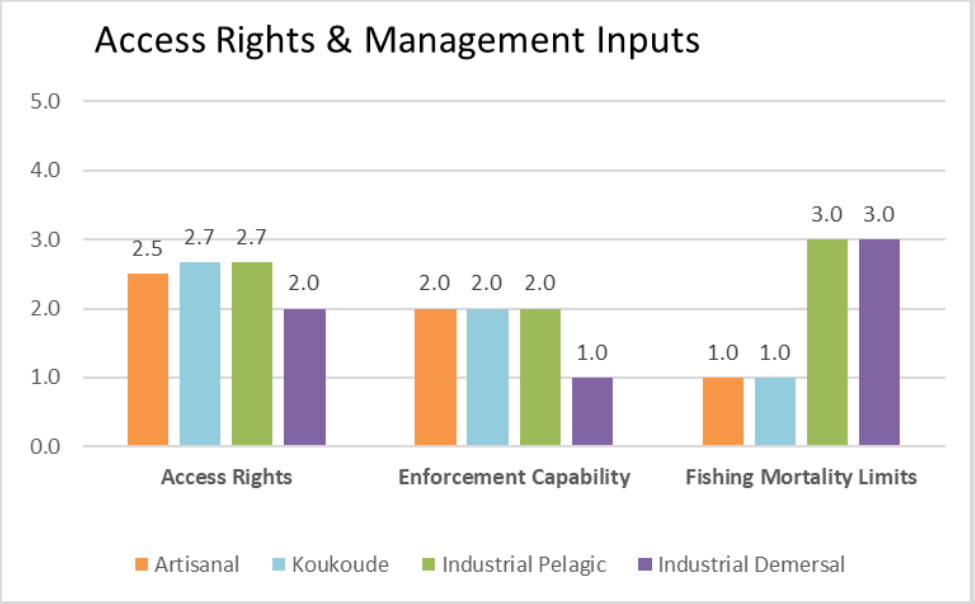
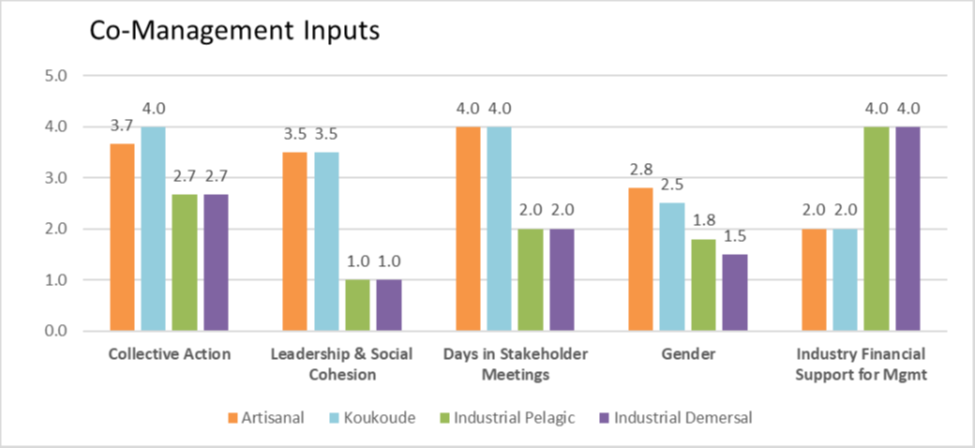
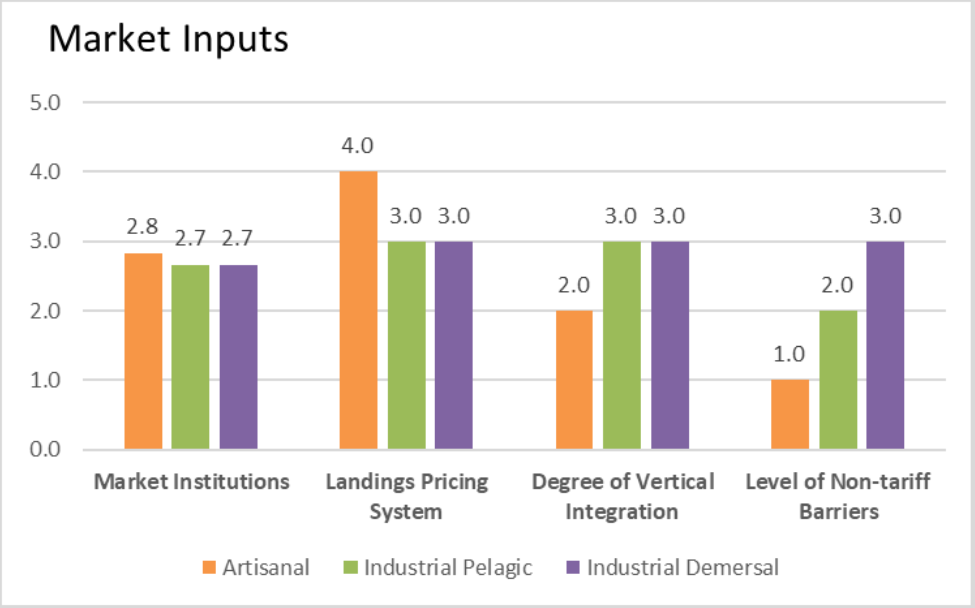
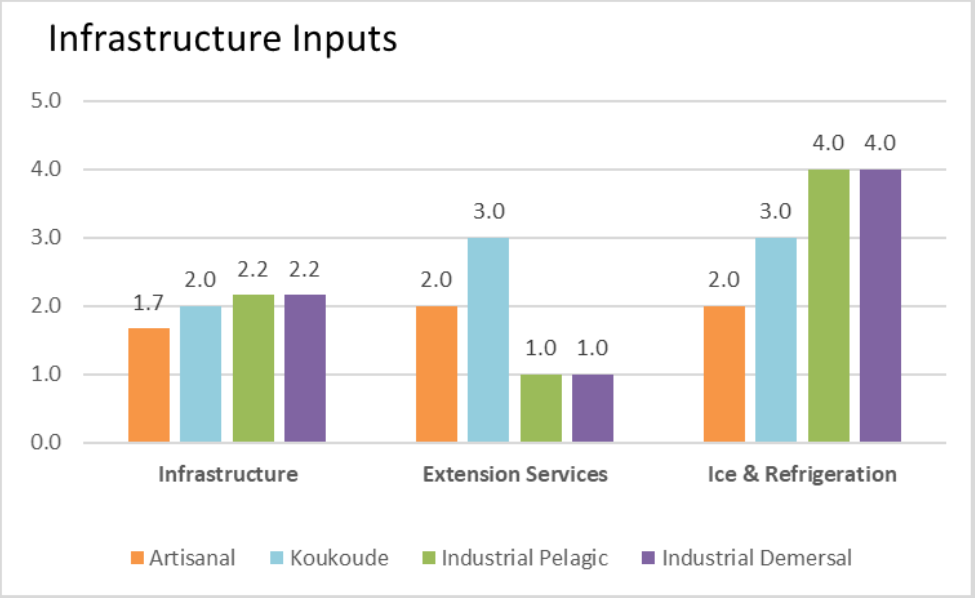
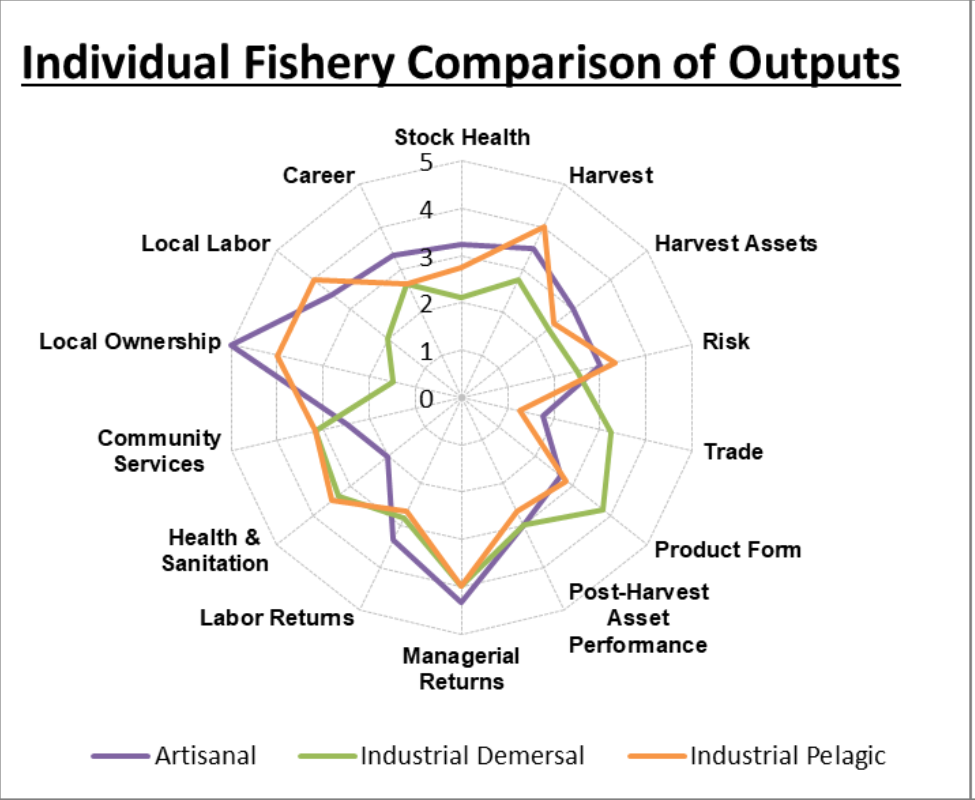
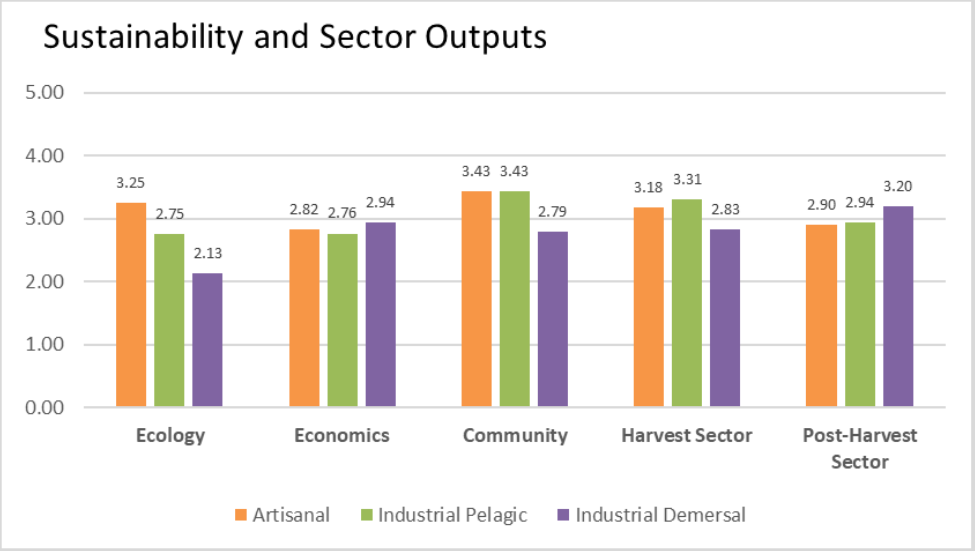
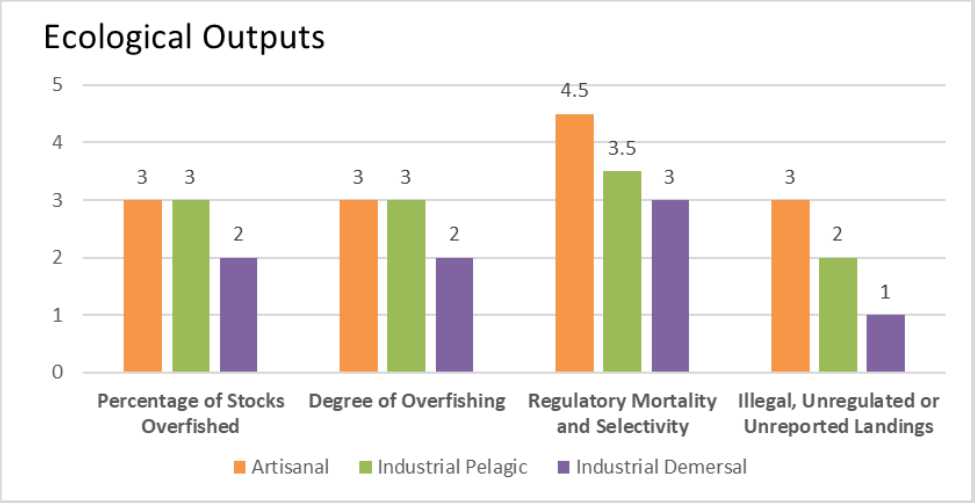
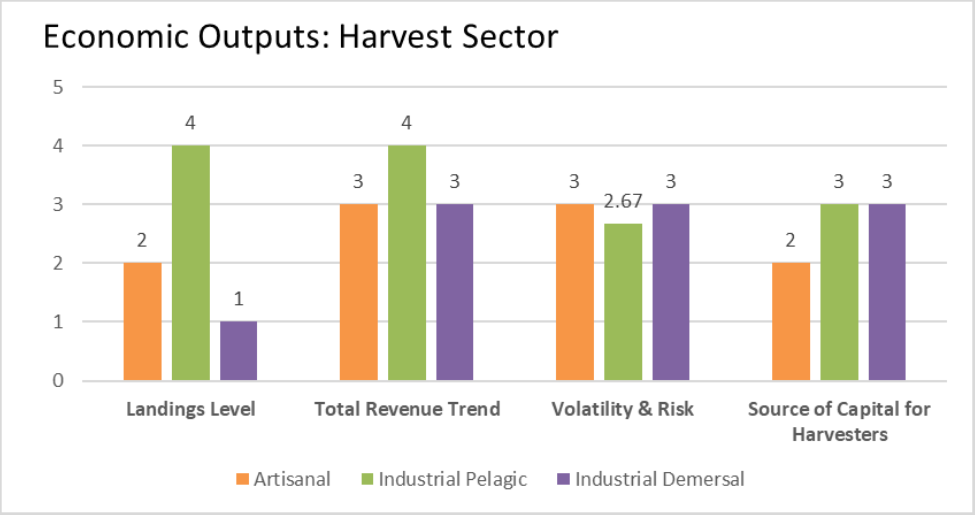
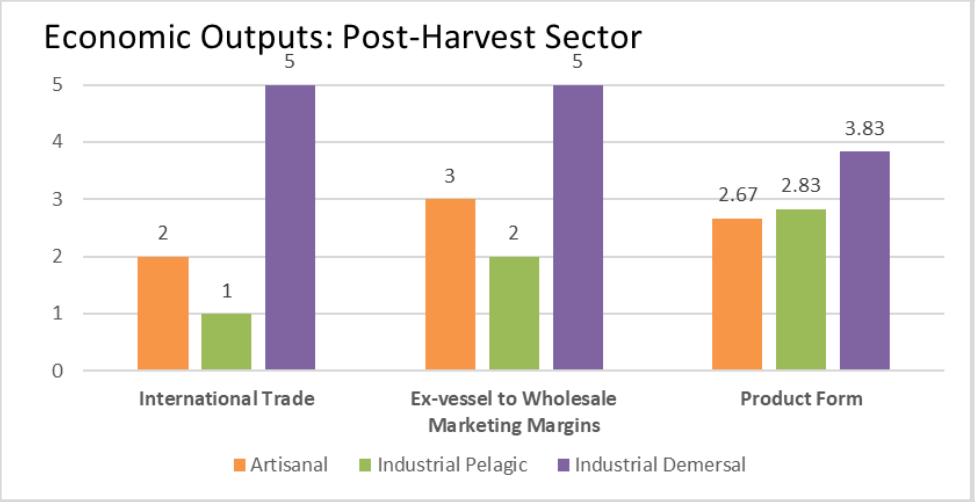
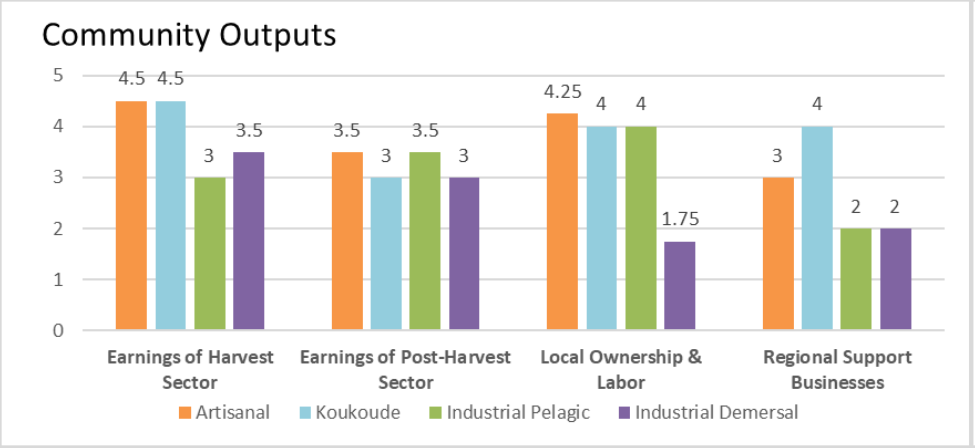
The sets of artisanal FPI scores examined are from mixed-species artisanal fisheries at the national level and within one specific location, Koukoudé. Koukoudé was chosen because it is a representative artisanal port in Guinea and the WARFP-GN local team anticipated WARFP post-harvest infrastructure investments in this location. However, for the most part, FPI scores for Koukoudé were very similar to the national artisanal scores. In addition to the artisanal fisheries, scores for the industrial sector were also prepared. Figure 3.3 below displays the FPI results for Guinea.
In Guinea, the FPI implementation revealed that key differences in management capacity, social cohesion, and collective action can drive ecological outcomes. At the same time, vast differences in the post-harvest sector’s economic success and the fisheries’ wealth-generation for local participants are also observed.
Figure 3.3. Guinea: Individual fishery comparison of inputs