This chapter of the e-book presents the prototype model of local economy-wide impact evaluation (LEWIE) in Guinea. The LEWIE framework was used to model the village economy of Koukoudé, Guinea, one of the target communities of WARFP-GN. The model explored linkages between fisher and non-fisher households, and between fishing and other sectors in and around the community. To illustrate the model’s potential uses, a variety of interventions are simulated, including changes in the price of fish, the productivity of local fishing activities and fish processing, social cash transfers to fisher and non-fisher households, and a road improvement. The data from LSMS2018-FISH were used to parameterize the model. This activity was co-financed by PROFISH. [Note that, since the LEWIE model is a prototype based on limited data, the results should be interpreted carefully and not be used for policy decision making.]
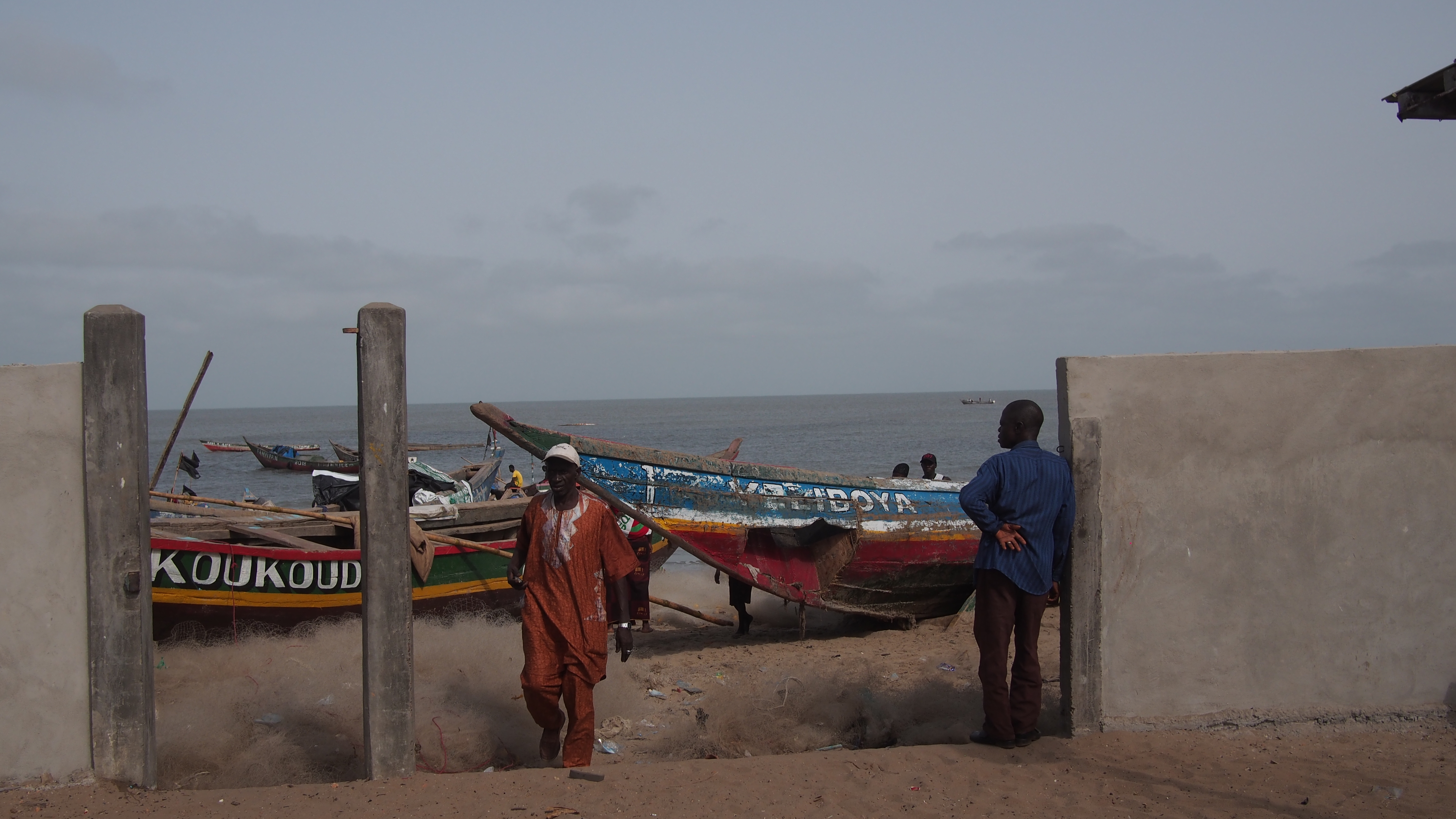
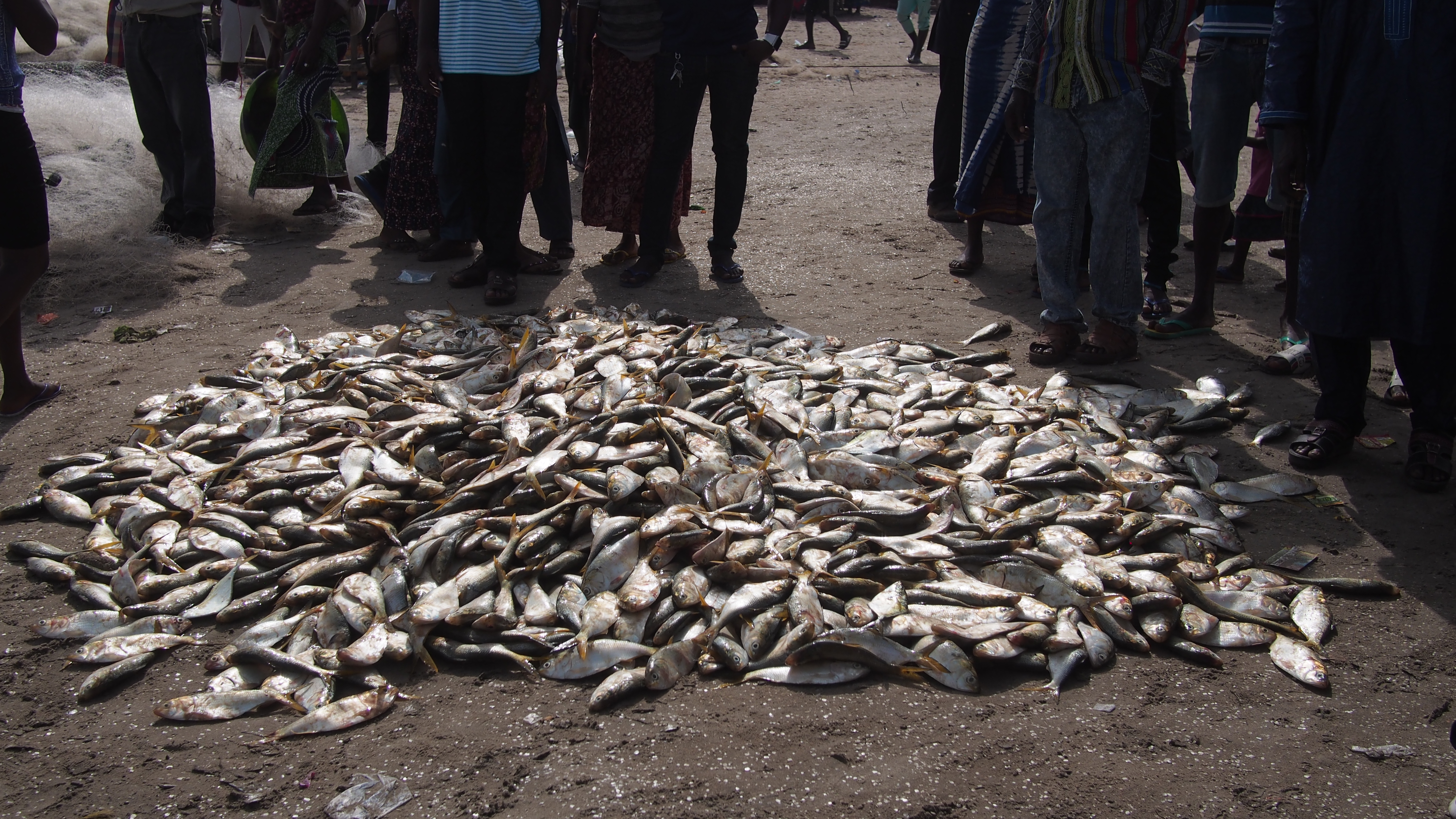
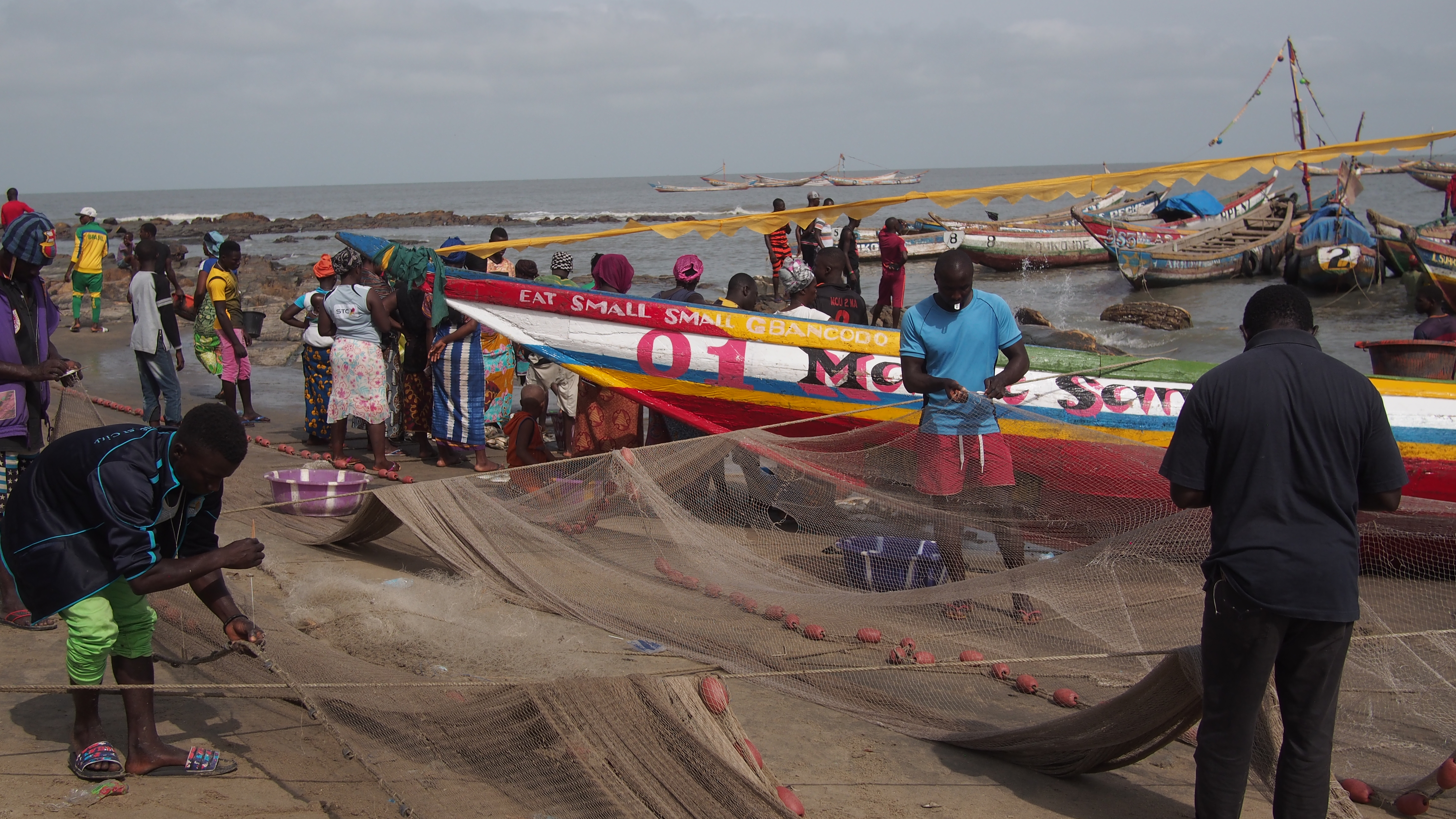
Guinea; Sachiko Kondo
Examples of the results of the prototype LEWIE model developed for Koukoudé are presented here. The detailed modeling approach and results are found in the full report.
Impact of Higher Fish Prices
The first set of results involve a scenario of increased fish prices. Possible reasons why fish prices may rise include: (1) a policy to maintain fish prices to support fishers’ incomes and (2) large-scale buyers (such as fish processors or traders) being able to offer higher prices (for example, to secure raw material, due to better access to market). This simulation assumes a 10 percent increase in fish prices.
As seen in Figure 6.1, higher fish prices can hurt fish buyers, including fish smoker women, while they likely benefit businesses in other sectors.
Figure 6.1. Impact of higher fish prices on production
Higher fish prices can alter fish consumption patterns of households in the community as well (Figure 6.2). More fish may be exported out of the village due to improved profitability from trade. Fish consumption in the village may fall, but households may eat more of other (relatively cheaper) food items.
Figure 6.2. Impact of higher fish price on consumption
This simulation illustrates the difficulty of increasing/maintaining fishers’ incomes while also increasing local fish consumption (a food security objective). Therefore, policies to support higher fish prices are unlikely to accomplish both objectives. A relevant question is: Are the households worse off because of lower fish consumption? The answer from this simulation is no. Incomes of both groups would increase and all households would achieve higher living standards (even if the increase is small—see Figure 6.3).
Figure 6.3. Impact of higher fish prices on real income
Potential Impacts of Road Improvements
The second example mimics a real-world scenario. WARFP-GN includes an investment in the improvement (paving) of the 2 km access road that connects Koukoudé village to the major highway.
Road improvement will likely reduce the cost of transportation in and out of the village. As a result, goods imported from outside the village will become available at lower prices (both for household consumption and for inputs for production activities in village), while fish buyers (traders) will be able to offer a higher price for fish. Note that the price of fish consumed in villages will also increase. This scenario assumes a 10 percent change in all prices of “tradables.”
As seen in Figure 6.4, given the model structure based on available data and assumptions, village production will increase across all sectors, with the largest increase for fish production. This shows that better roads can be a driver for overfishing, and that there is a strong need to improve fisheries management systems in parallel with infrastructure investments such as road improvements.
Figure 6.4. Impact of road improvement on production
Figure 6.5 shows that road improvement impacts on consumption patterns are such that spending on retail and goods imported from outside the village would grow most.
Figure 6.5. Impact of road improvement on consumption
Conclusion
Overall, the LEWIE exercise for Koukoudé was found useful by making explicit the kinds of linkages that do not receive enough attention when designing fisheries interventions. These linkages include:
- impacts on non-direct beneficiaries (including non-fishing households in a fishing village)
- impacts on economic activities other than fisheries-related ones in the village
- impacts on consumption patterns of fish and non-fish goods and services.
However, the specific simulation results presented here should be viewed as indicative, not prescriptive, given the preliminary nature of this prototype model. Constructing a LEWIE model that could serve as a basis for policy and project design would require having access to more detailed and reliable data from household and business surveys designed for this purpose.