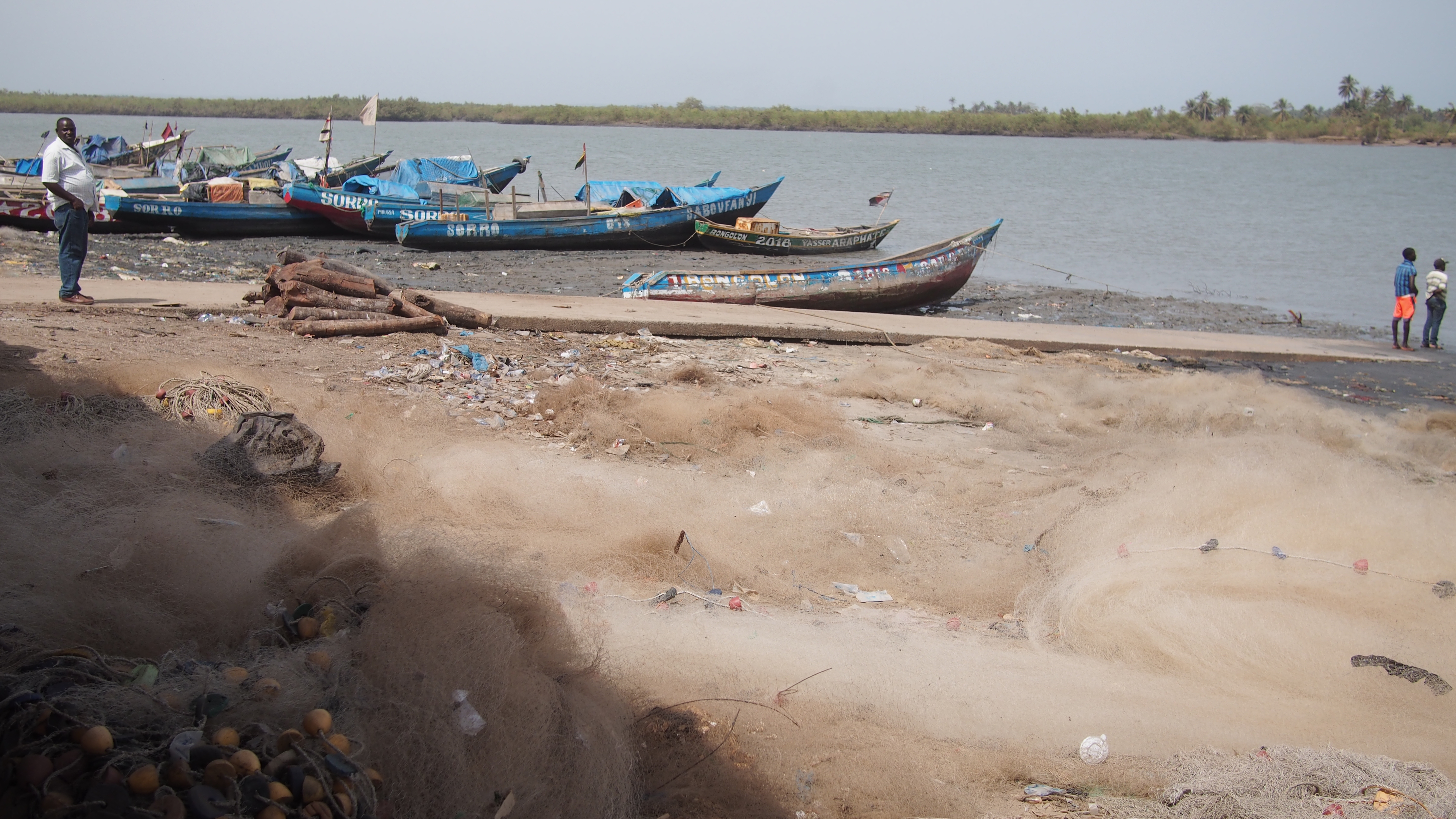
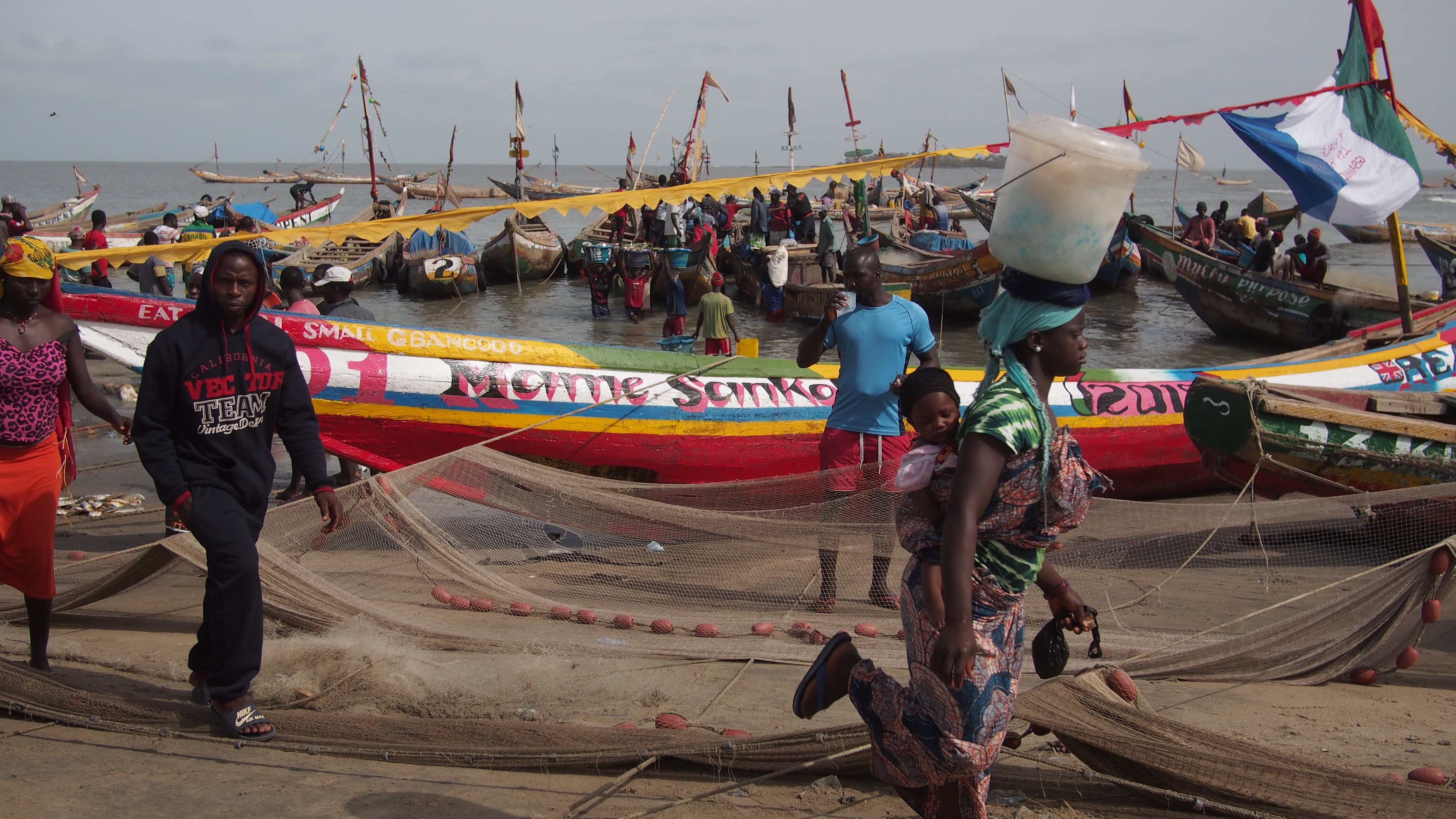
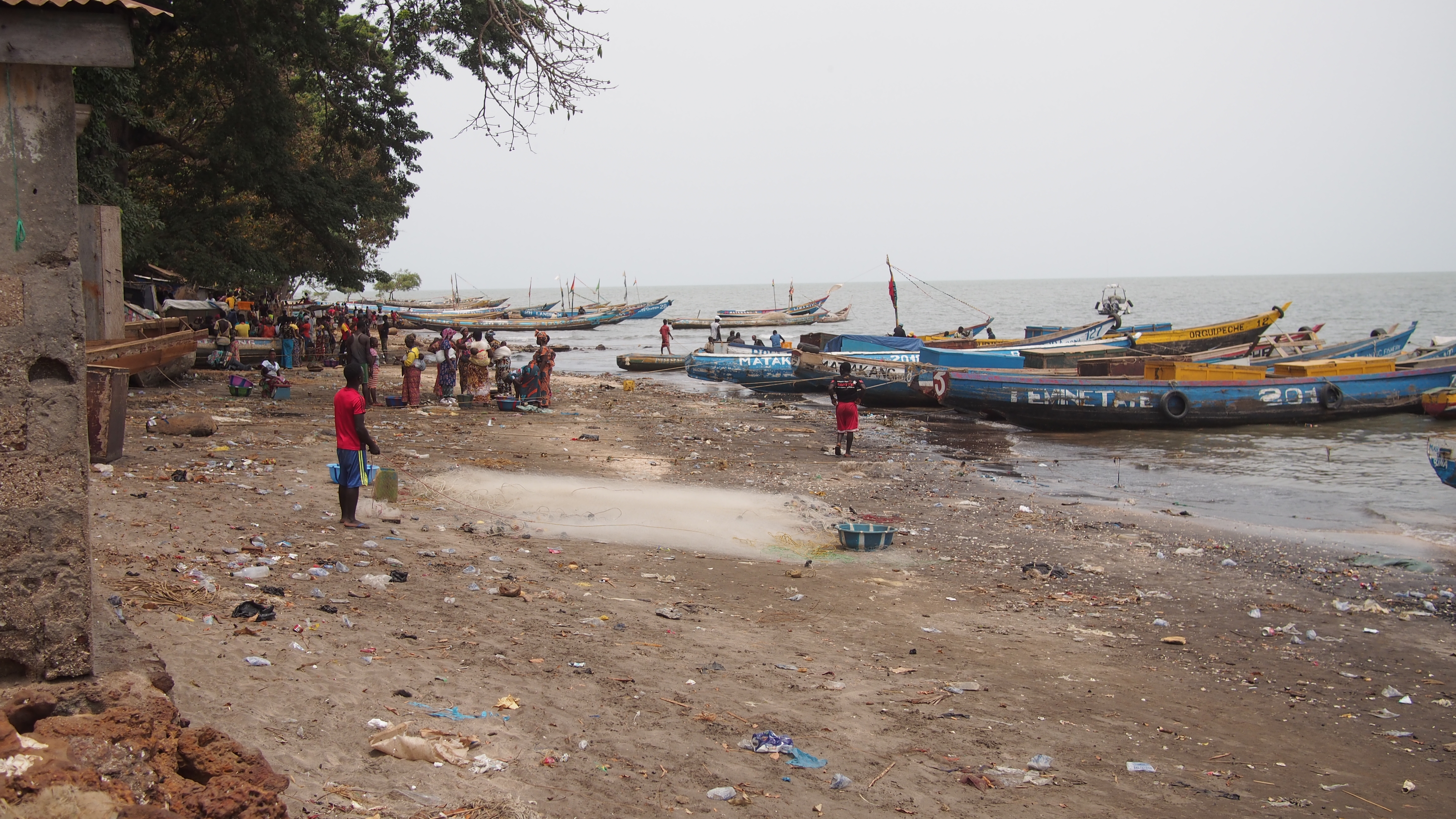
Results of the desk review and interviews revealed distinctive characteristics of community fisheries operation and management in each of the three sites. Local historical context (notably related to past development interventions) explain some of the site-specific characteristics. Other important site-shaping characteristics include the nature of local leadership and fishing-related conflicts, as well as the dynamism of the local associations and community-led initiatives. The map below provides key information for each of the three study sites (Matakang, Bongolon, and Koukoudé) included in this activity; clicking on each study site will show the information gathered for that site.
Figure 4.1. Targeted fishing communities in Guinea
Targeted Fishing Communities in Guinea
Based on the information gathered for fisheries in Guinea and in the three communities, the study makes the following recommendations to guide implementation of the WARFP-GN and any future fisheries-related development projects: (1) better coordination and cohesion of Guinea institutional actors; (2) better coordination between development projects; (3) enabling access to information for the communities; (4) building on existing legislation and structures; and (5) engaging the youth. The study also identified key knowledge gaps in the fisheries in Guinea: (a) feedback from past fisheries-related projects in Guinea; (b) information on the importance of migrant fishers; (c) information on current financing arrangements between fishers and traders/processors; (d) information on alternative livelihood activities; (e) information on improving the physical infrastructure for economic integration of the communities; and (f) information on the local economies. (Point (c) is addressed in Chapter 5 and points (d) and (f) in Chapter 6.)
Guinea; Sachiko Kondo